The Edge Is Where AI Becomes Useful
Nearhuman Team
Near Human builds intelligent safety systems for micromobility — edge AI, computer vision, and human-centered design. Based in Bristol, UK.
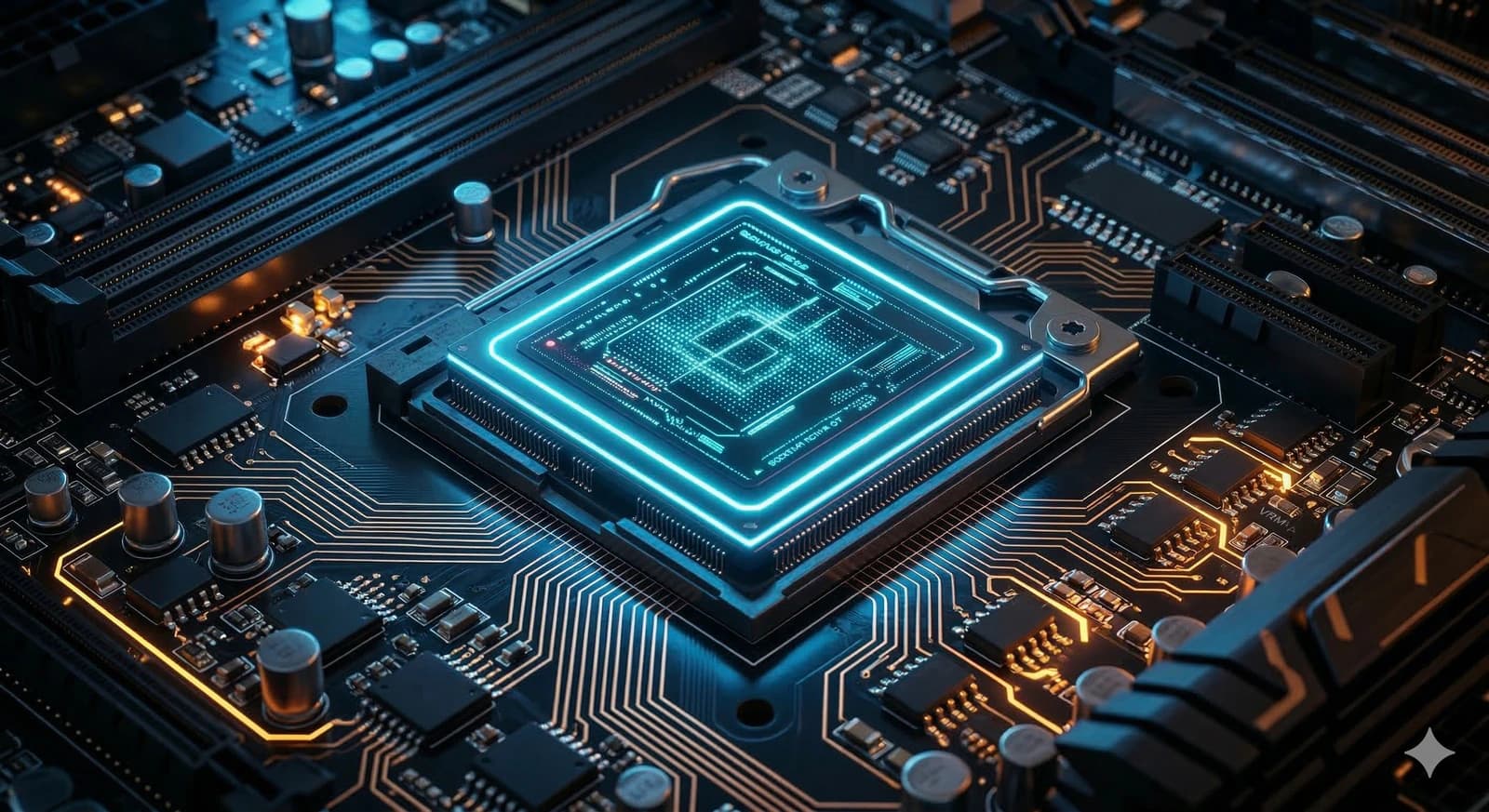
AI has advanced rapidly through larger models, greater compute, and increasingly powerful cloud infrastructure. But for many real-world applications, the most important question is not how much intelligence a system can generate in a data centre. It is how effectively that intelligence can operate in the moment, in the environment where action is required. That is why the edge matters. The edge is where AI becomes practical, responsive, and genuinely useful.
Edge AI refers to intelligence that runs on or near the device itself rather than relying entirely on distant cloud systems. In physical products and real-time environments, that distinction matters. A system operating on a vehicle, sensor platform, camera, robot, or embedded device cannot always wait for round trips to remote infrastructure. It may need to interpret the world instantly, make decisions with low latency, preserve privacy, and continue operating under variable connectivity. In those situations, intelligence at the edge is not an optimisation. It is a requirement.
This is especially true for computer vision and embedded systems. When machines need to perceive motion, detect obstacles, monitor environments, or respond to dynamic conditions, speed and reliability are essential. Sending every frame or signal to the cloud is often too slow, too expensive, or too fragile for practical deployment. On-device intelligence allows systems to process information where it is generated, enabling faster response and more resilient operation in the real world.
But the value of edge AI goes beyond performance. It changes what kinds of products are possible. It enables devices to become more context-aware, more adaptive, and more autonomous within the environments they inhabit. It supports privacy-sensitive applications by limiting unnecessary data transfer. It can reduce infrastructure costs and improve scalability in distributed systems. Most importantly, it brings intelligence closer to the moment of use, which is where users experience value.
The future is not edge versus cloud. It is intelligent coordination between both.
This does not mean the cloud becomes irrelevant. Training, analytics, orchestration, and long-term optimisation may still live centrally, while real-time perception and decision support happen locally. The strongest systems will be those designed across this boundary with purpose. They will place intelligence where it is most effective rather than where it is most convenient from a technical perspective.
Designing for the edge also forces product discipline. Resources are constrained. Compute, power, memory, thermal limits, and device reliability all matter. That makes edge systems harder to build, but often better designed. Teams must focus on what the system actually needs to do, what performance really matters, and how to deliver intelligence efficiently in context. This tends to produce solutions that are more grounded in practical value rather than abstract capability.
That practical grounding is increasingly important as AI moves into physical infrastructure, mobility, robotics, and operational environments. Real-world systems do not benefit from intelligence in theory. They benefit from intelligence that shows up at the right time, in the right place, with the right level of responsiveness. Edge AI makes that possible. It turns computation into action close to where decisions need to happen.
At Nearhuman, we see the edge as a key part of making intelligent systems deployable at scale. It is where perception becomes useful, where latency becomes safety, and where product design meets the realities of the environment. Building for the edge means building for the real world, not just the benchmark.
The next wave of AI will not be defined only by larger models or greater centralised compute. It will also be defined by how effectively intelligence can be distributed into the devices, systems, and environments where people actually live and work. That is where AI stops being distant and starts becoming embedded in everyday outcomes.
The edge is not just a technical architecture. It is where intelligent systems become real.
Nearhuman Team
Mar 5, 2026